
Sunlight
Sunlight is energy. Small amounts of sun exposure gives us Vitamin D, which is beneficial. However, 80% of our aging is actually caused by the sun. Overexposure to the sun not only causes aging, but also causes hyperpigmentation, capillary damage, free-radical damage, collagen deterioration, and skin cancer.
The ultraviolet (UV) radiation emitted from the sun causes the skin to burn.
UVA radiation causes premature aging, sun spots, and wrinkles.
UVB radiation affect’s the skin’s top layer, and is responsible for sunburn.
UVC radiation is the most dangerous, and poses the greatest risk for skin damage.
SPF, or sun protection factor, is the ability of the ingredients in a product to delay sun-induced erythema, which is the visible sign of sun damage.
Tanning
Tanning in tanning beds also contributes to skin damage. Tanning causes photoaging, or premature aging. Sunless tanning is a safer alternative for the skin.
Choosing A Sunscreen
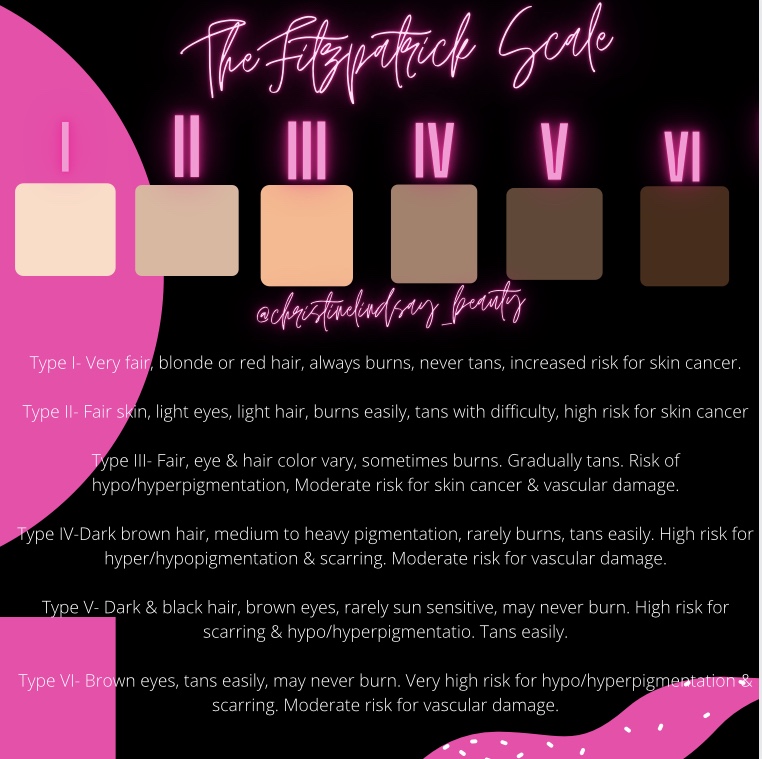
Estheticians use The Fitzpatrick Scale to help determine which sun protection products are best for you. Ask your dermatologist, or esthetician which sunscreen is best for your skin, or take my Skincare Quiz to get a custom recommendation from me. I am currently using Glymed Plus Environmental Protection Gel SPF 30 in my skincare regimen, which is a lightweight, water based SPF safe for all skin types.
Chemical Versus Physical Sunscreens
I commonly hear from people that are struggling with finding an SPF that doesn’t irritate their skin. Fragrances, and preservatives in sunscreen can cause allergies, and irritation. Don’t give up on wearing SPF just yet! Did you know there two different types of sunscreen you can be using?
A chemical sunscreen is an organic compound that chemically absorbs ultraviolet radiation. In other words, it absorbs into the skin, and then absorbs UV rays, and converts the rays into heat to release from the body.
A physical sunscreen is an inorganic compound that physically reflects the ultraviolet radiation off of the skin. An example of this is zinc oxide, and titanium dioxide.
How to Prevent Sun Damage
UVA radiation comes through clouds, and windows. It’s also stronger through glass so it’s important to wear an SPF every single day, regardless of the weather. Here’s some tips to help you prevent sun damage.
Wear SPF daily, and apply 20 minutes before sun exposure, and reapply every 2 hours or as needed.
Avoid exposure during peak UV exposure times.
Wear a hat, and protective clothing outdoors.
Apply sunscreen liberally after swimming, and reapply hourly.
Check to make sure your SPF hasn’t expired.
Wear sunglasses to protect the eyes.


 Skin Deep Beauty by Christine Lindsay
Leave a comment